Public beta · v0.7 live. Jan 2026 – Present.
Trinity
Agentic development environment (ADE)
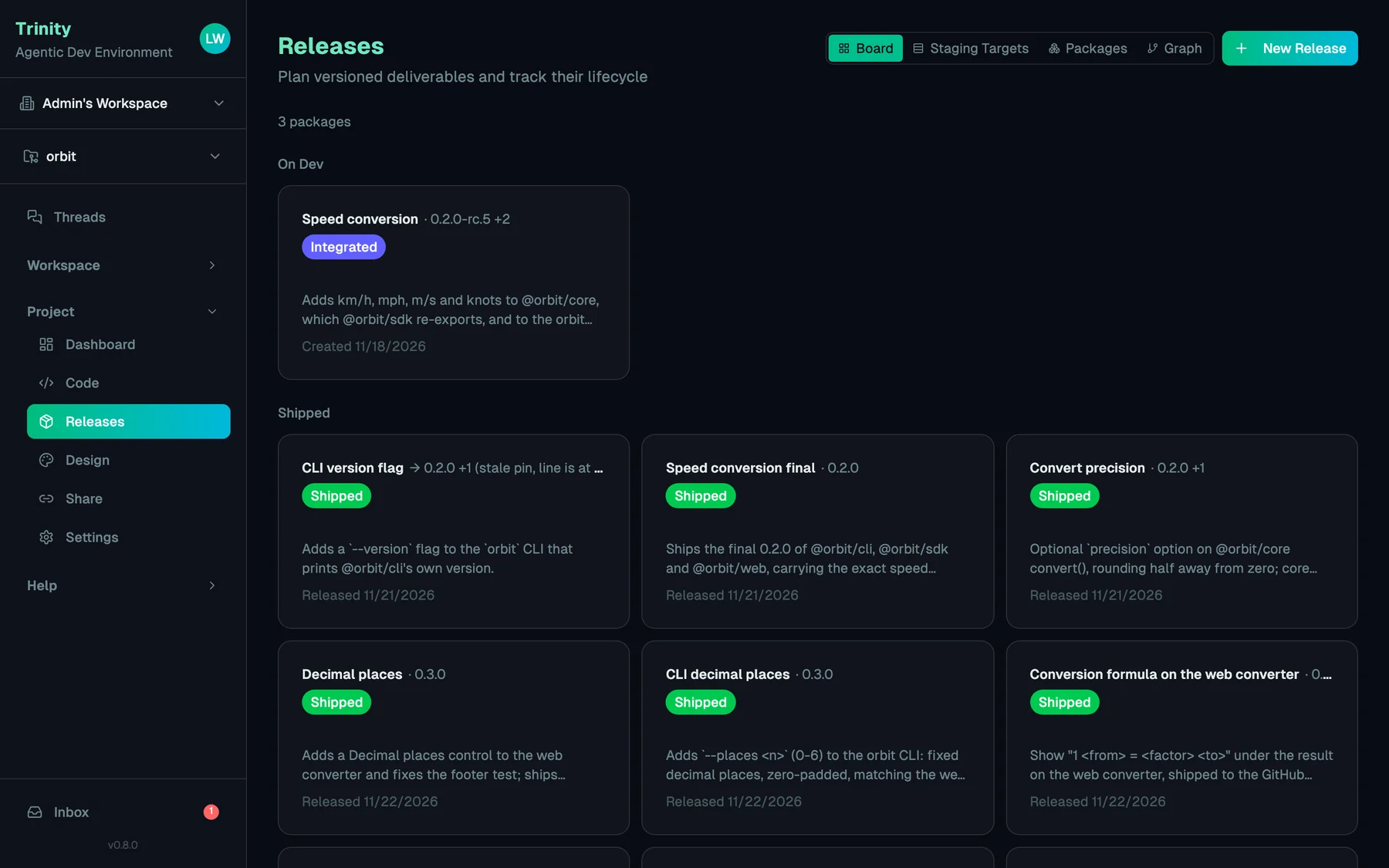
One place where a team builds, maintains and improves its products with AI. Everything runs on releases: it plans them as releases → epics → stories, runs several at once (features, hotfixes, maintenance lines, release candidates) in isolated git worktrees, merges only on green CI, and tags and publishes each release for you.
The team
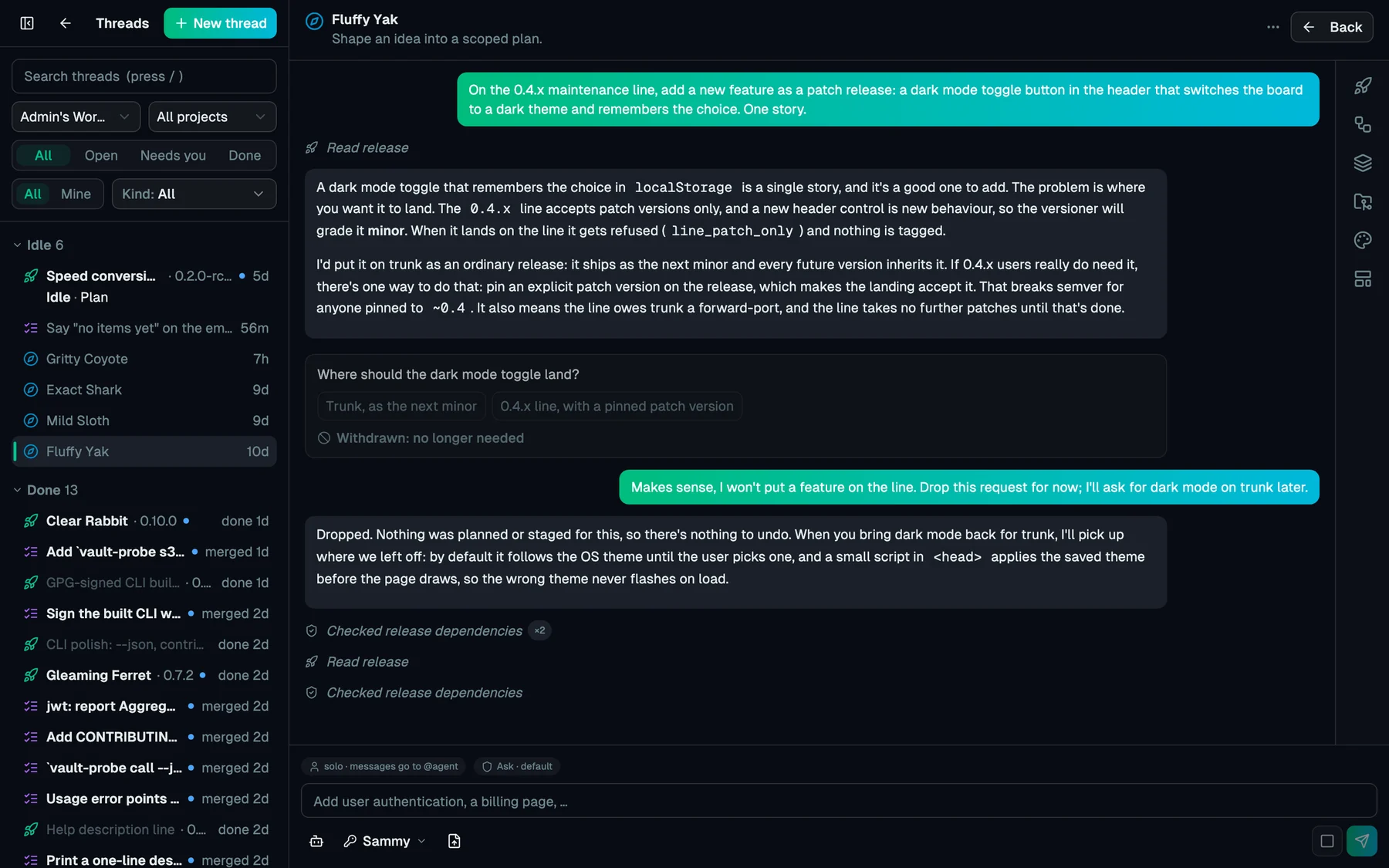
Needs you
approvals, access requests and questions, in one list
Architect
plans each release and tracks the releases it depends on
Releases, in parallel
2.4.0
feature release
3 stories buildingrelease agent · six checks · triage
story agents ×3
2.3.1
hotfix
checks 5 of 6release agent · six checks · triage
story agent ×1
1.9.4
maintenance line
tagged and publishedrelease agent · six checks · triage
shipped
Each story
- Analyst
- Implementer
- Auditor
- Documenter
a foreman per story, in its own worktree and PR, with 14 reviewer types across Claude and Codex
Each level has its own rails
- Architect
- plans need a person's approval
- Release
- six checks with explained verdicts; spend and time limits
- Story
- fenced sandbox; access judged against the spec; merges only on green CI
- Every agent
- sees only the tools its run was granted
What I built
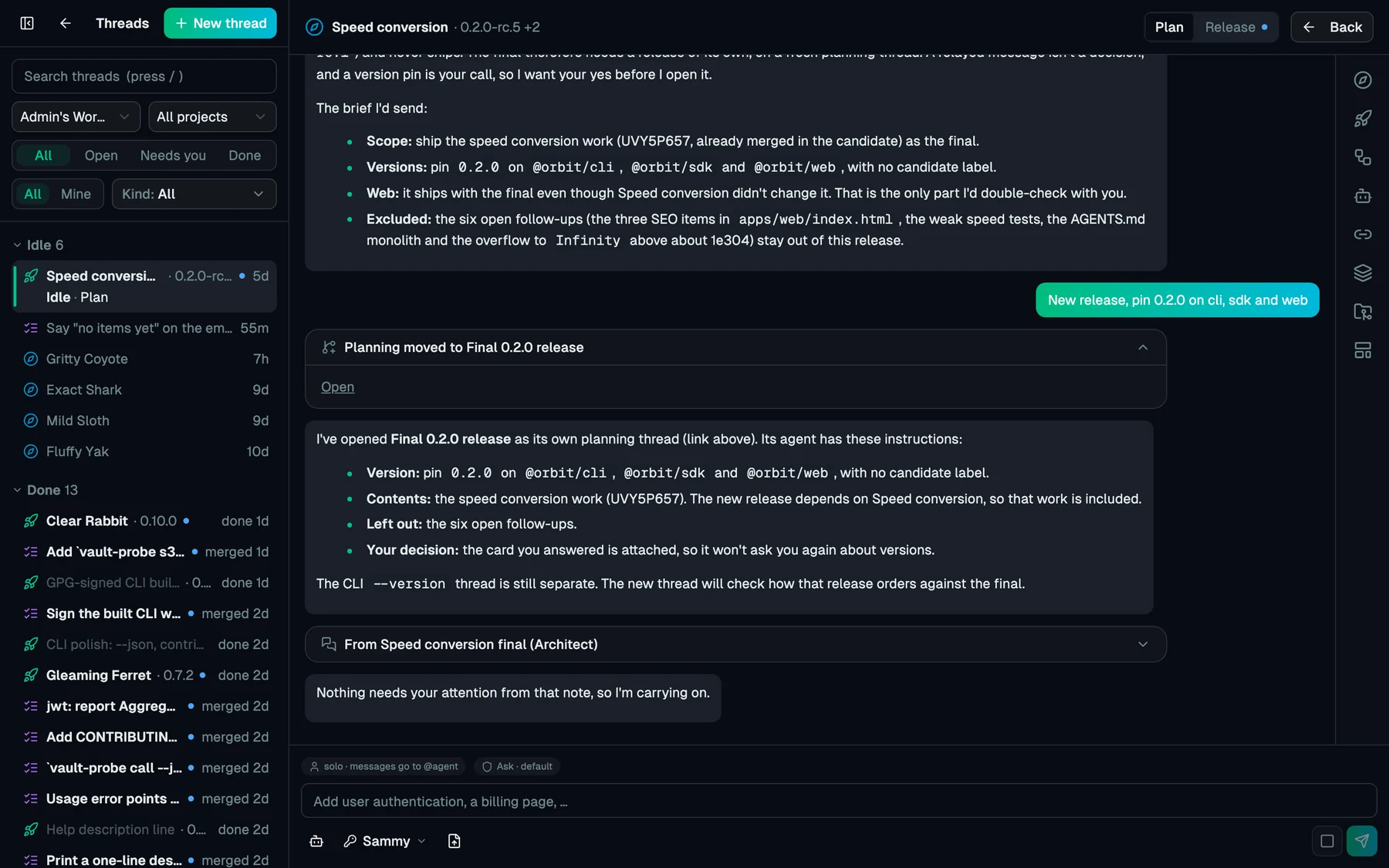
- Designed a hierarchy of specialized agent threads: an Architect that plans each release and tracks the releases it depends on, a release agent that follows the plan, runs six release checks as sub-agents with explained verdicts and triages failed stories, and a foreman per story that runs analyst → implementer → auditor → documenter. Teammates (designers included) and agents work in the same threads, agents message each other about overlapping files, and everything waiting on a person lands in one Needs you list.
- Built tiered autonomy from Supervised to Unattended: every agent runs fenced in a sandbox, and unattended stories have their own agent grant or deny access requests against the story's spec and plan, while secrets and whole-fence requests always escalate to a person, each grant is logged and revocable, and releases stop at spend and time limits.
- Built the parallel execution engine and review: per-story git worktrees across repos, merges only on green CI through conflicts and partial failures, 14 reviewer types across Claude and Codex, and a judge with its own jury, called with @judge, that researches and weighs options head-to-head.
- Architected a Tauri v2 desktop app (SolidJS, Effect 4), a Next.js 16 control plane and real-time sync over Cloudflare Durable Objects; release management for the projects it ships, with maintenance lines, release candidates and npm/crates.io publishing behind an approval preview.
- Shipped 30+ versions since April 2026, ~800k lines of TypeScript and ~4,300 test files, built solo. Its latest round of test projects, complex setups and release scenarios built and shipped entirely through Trinity, produced 450+ commits, 230+ PRs and 74 version tags across seven repos, monorepos with per-package release candidates included.
More of the detail
- Grew out of BAP, a Bitcoin-anchored coordination protocol I designed. From December 2025 a friend helping with the code and I experimented with Ralph loops to build its wallet in Rust. The loop shipped isolated tasks, but it couldn't hold a living plan, let two people steer it, review its work or run in parallel. Trinity is the system I built to fix that (see "The Ralph Wiggum Loop, evolved" in Writing).
- Scripted release scenarios run on a real test repo: racing parallel releases, a hotfix while dev holds unshipped work, out-of-order patches on a maintenance line, pinned majors, and a shared build that tags only the packages a change reached.
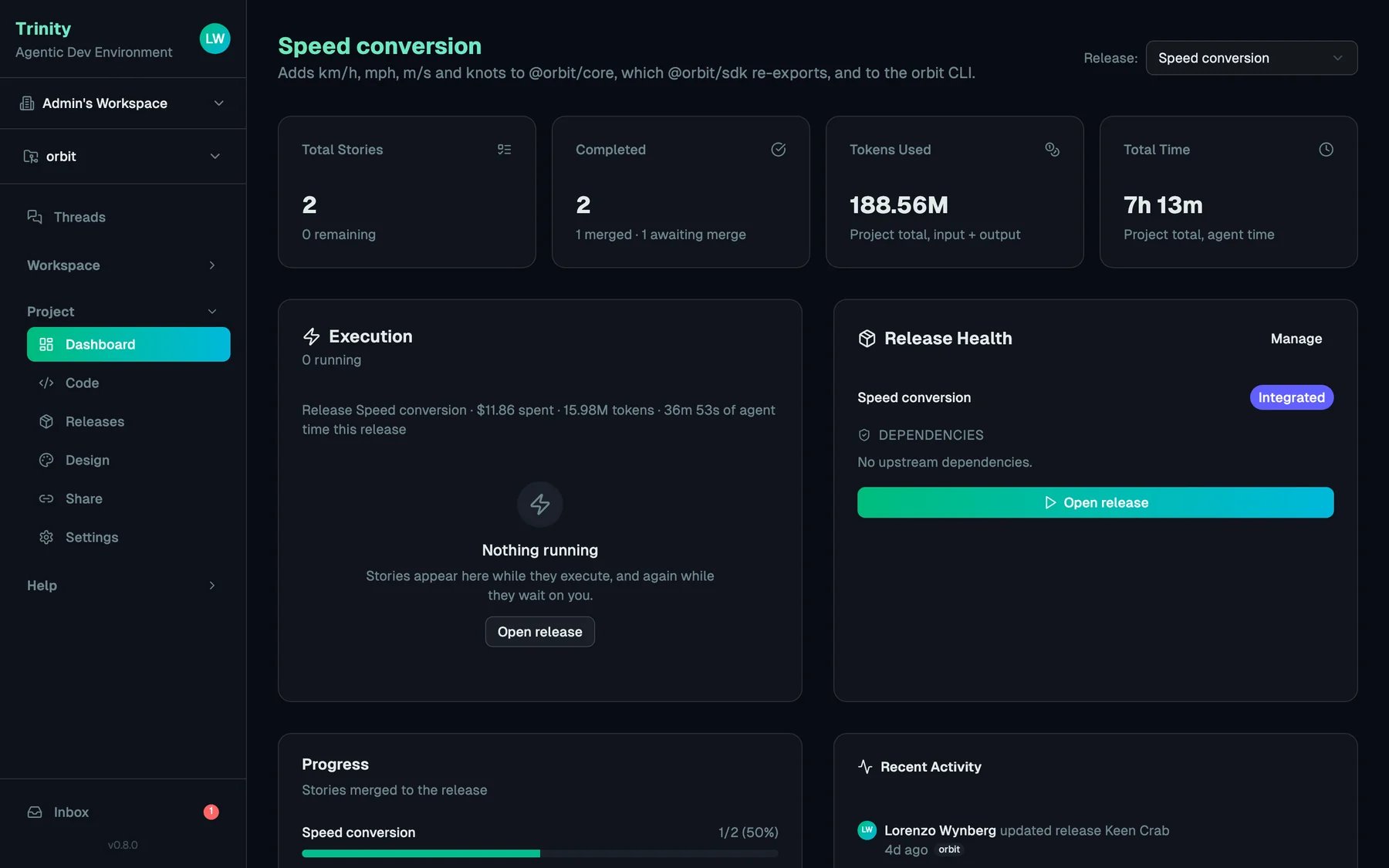
- A release's page opens on its Flow: readiness, the six checks with their verdicts and reasoning, promotion, shipped and close-out.
- Work an agent finds along the way is filed as a follow-up and de-duplicated into occurrences, so problems reach a person instead of getting lost in a transcript.
- When a Claude or Codex account hits its usage limit, paused work moves to the next connection by itself.
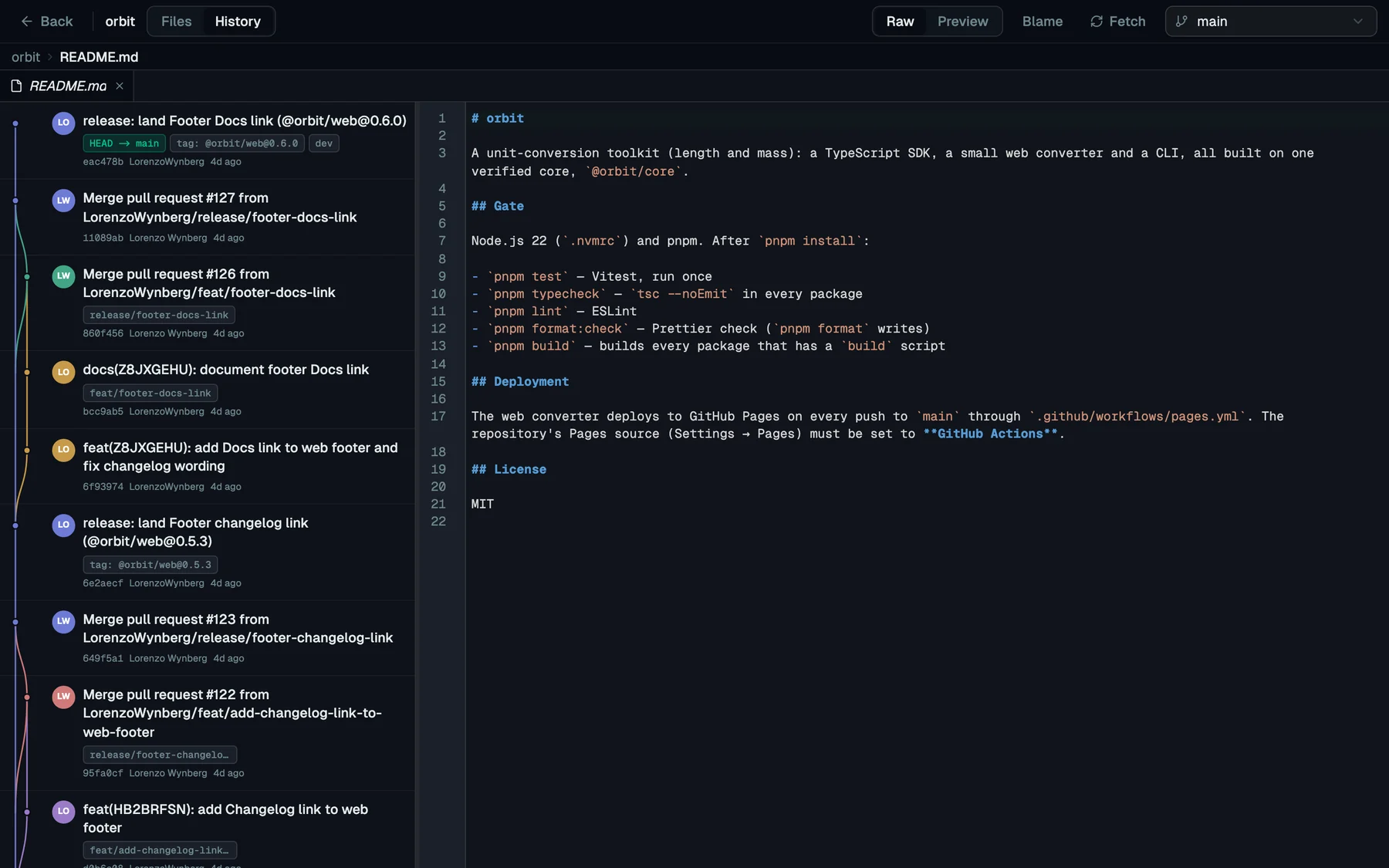
- Agents write and maintain each package's documentation inside its own repo, committed with the code it describes.
- Importing a project starts with an agent that reads the folder, explains the steps and reports which existing tooling Trinity replaces.
- Three data tiers: a website control-plane database, a Turso database per account and scope, and local SQLite per machine. Desktop clients never hold Turso credentials.
- Team secrets with envelope encryption, device-to-device key envelopes, and a cascade that resolves which secret applies at which scope; agents can ask for keys on one card without the value passing through the conversation.
- Made cross-workspace data leaks a compile error with scope-branded cache keys and ~30 custom static-analysis guards.
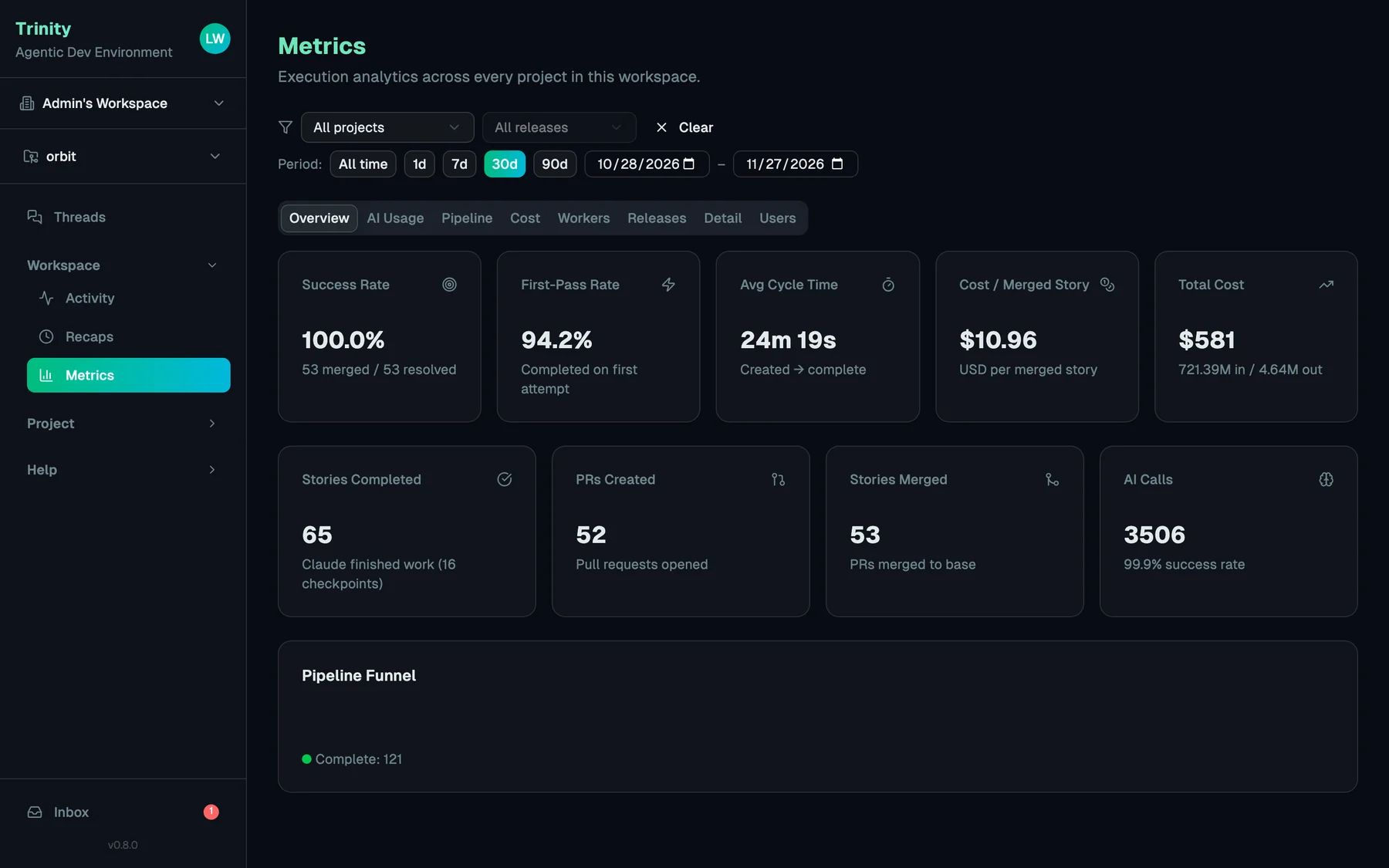
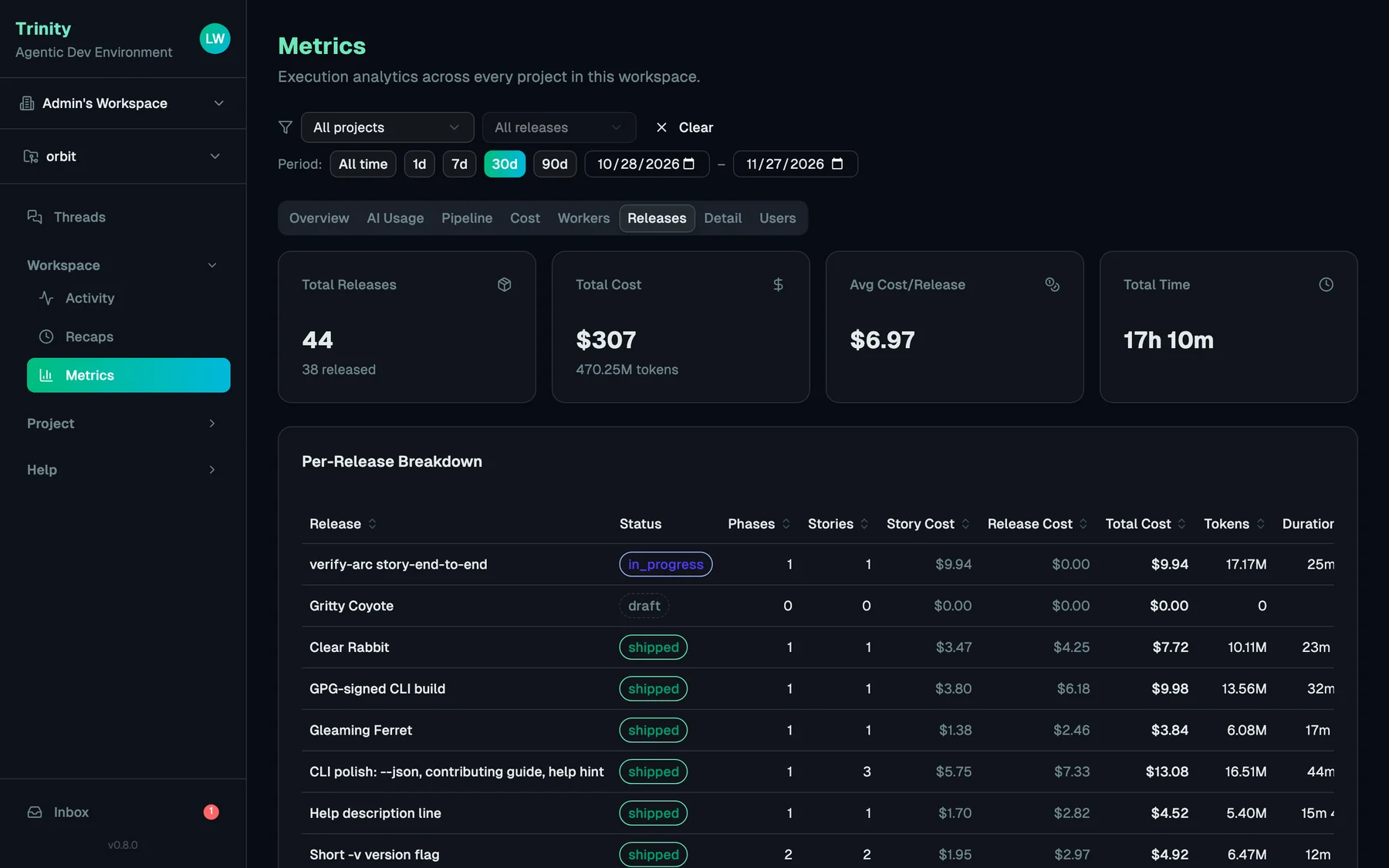
- Token-level cost tracking with time-versioned rate cards and cache-write premiums.
- Forge adapters for GitHub, GitLab, Bitbucket and Forgejo/Gitea; signed, notarized macOS and Linux builds with auto-update.
- Also publish the open-source orchestration-skills agent-pipeline plugin (v5.28) for Claude Code and Codex, which Trinity's own monorepo is built with.